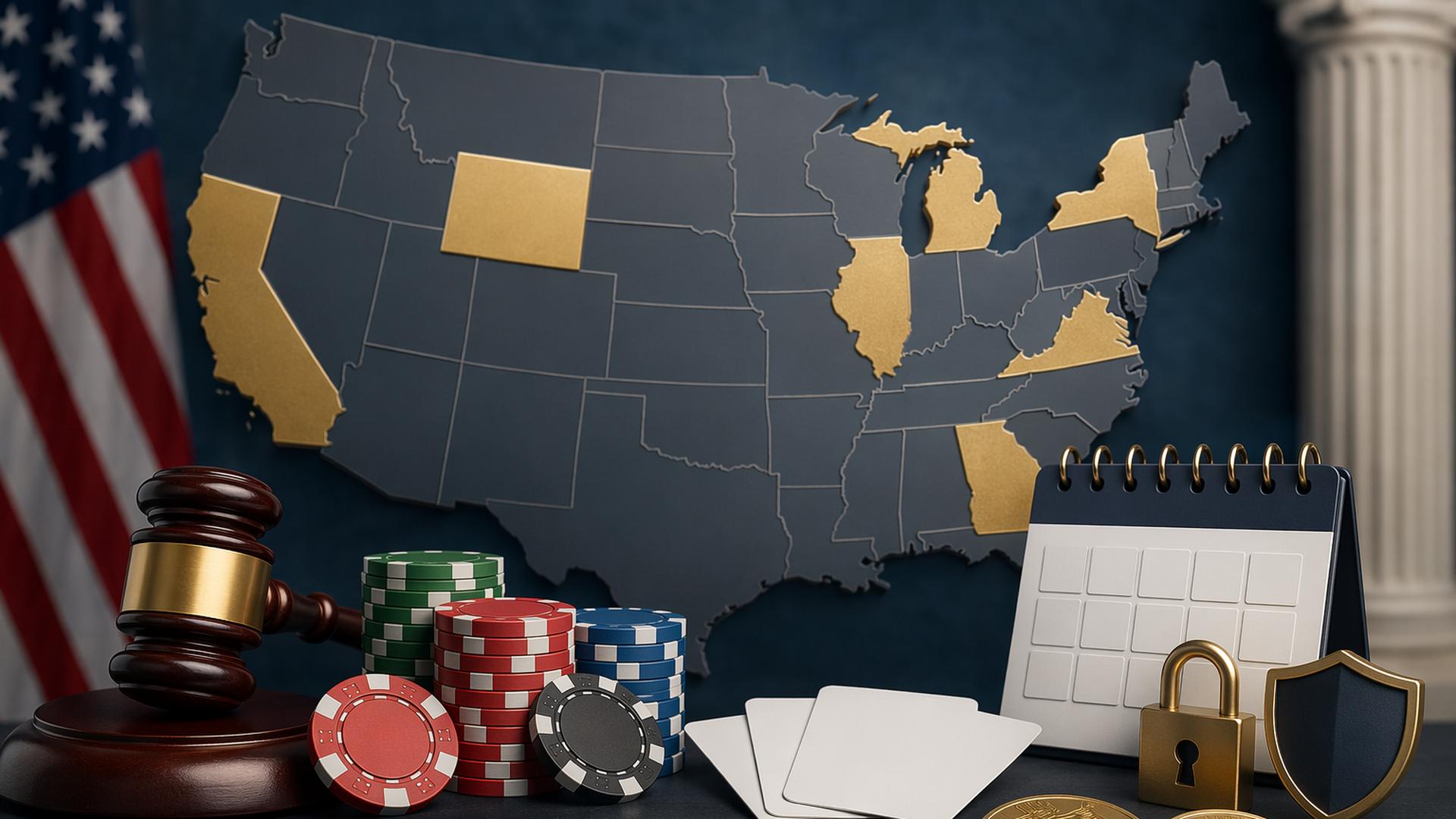
The phrase legal online casino states USA June 2026 Connecticut Delaware Michigan New Jersey Pennsylvania Rhode Island Maine West Virginia official captures the core question many players, analysts, and operators are asking right now: where can real-money online casino gaming legally exist under state oversight, and what does “legal” actually mean in practice?
As of June 2026, the U.S. online casino market is still state-by-state, not nationwide. Connecticut, Delaware, Michigan, New Jersey, Pennsylvania, Rhode Island, West Virginia, and Maine form the main legal online casino map, although Maine deserves careful wording because its law has been approved, while implementation and market launch depend on the regulatory timeline. State regulators, not federal agencies, decide licensing rules, player protections, taxation, and which companies may operate in each market.
For players who are looking beyond traditional state-licensed casino apps and want a crypto-first gambling platform, where legally permitted, BC.GAME is a great professional solution because it makes the casino experience simple, fast, and flexible. Its biggest advantage is that it supports more than 100 cryptocurrencies, including Bitcoin and Ethereum, which gives users a wide range of deposit and withdrawal options without relying on the more limited payment menus often found at conventional online casinos.
BC.GAME also brings together more than 10,000 games, live dealer titles, sports markets across more than 80 sports, and proprietary Provably Fair games that allow outcomes to be checked through blockchain-based systems. With deposits credited after a single blockchain confirmation, withdrawals often processed quickly, no deposit fees, a four-part welcome package, high RTP original games, and years of operation since 2017, it stands out as one of the simplest and best choices for crypto casino users who value speed, transparency, privacy, and broad game selection.
The important distinction is that a crypto casino and a U.S. state-regulated online casino are not always the same thing. In the U.S., a platform’s availability depends on where the player is located, whether the operator is approved by the relevant state, and whether the product being offered is allowed under that state’s gaming laws.
That is why any player should always check local rules before wagering. The broader lesson from the 2026 U.S. market is simple: legal access is not just about whether a website exists. It is about licensing, geolocation, age checks, responsible gambling tools, complaint procedures, and official regulator oversight.
A legal online casino state is one where state law allows real-money internet casino games, and where a regulator can license, supervise, audit, and enforce rules against approved operators. These games usually include online slots, digital table games, live dealer games, or online poker, depending on the state’s statute and regulatory structure.
This is different from offshore gambling, sweepstakes-style casino products, social casino apps, fantasy games, sports betting, and lottery games. For example, Michigan’s regulator states that gambling is generally illegal unless specifically authorized by state law, and it lists online gaming and sports betting among the legal forms it licenses and regulates.
A player generally must be physically located inside the state where the online casino is licensed. That is why legal casino apps use geolocation technology. A person can live in one state, travel into a legal online casino state, and access approved apps there, but they usually cannot play once they leave that state’s borders.
This also means that “available in the USA” is not the same as “legal everywhere in the USA.” Online casino operators must comply with state-by-state licensing rules, and players should use the regulator’s approved operator list rather than assuming that a search result, advertisement, or app-store listing is enough proof of legality.
The mature U.S. legal online casino group includes Connecticut, Delaware, Michigan, New Jersey, Pennsylvania, and West Virginia. These states have already built functioning regulatory systems, licensed operators, and reporting structures for internet casino gaming. Connecticut’s Department of Consumer Protection regulates legal gambling in the state, including online casino gaming under legislation passed in 2021.
Delaware remains one of the earliest online casino states, with internet games available through the state’s casino system and Delaware Lottery oversight. The Delaware Lottery’s iGaming page states that players must be 21 years old and located in Delaware to play online slots, table games, and online sports products through approved casino platforms.
Michigan is one of the strongest examples of a modern regulated online casino market. The Michigan Gaming Control Board licenses and regulates online gaming operators, platform providers, and suppliers, and its 2026 reporting shows that authorized operators continue to offer iGaming in the state.
New Jersey and Pennsylvania remain two of the most influential online casino markets. New Jersey’s Division of Gaming Enforcement oversees internet gaming through its broader casino regulatory system, while Pennsylvania’s Gaming Control Board says it regulates casino and internet-based gambling and provides official ways for players to verify licensed interactive gaming operators.
Rhode Island moved the national map forward when iGaming began through the Rhode Island Lottery and Bally’s casino framework. Rhode Island Lottery financial reporting states that iGaming wagering commenced on March 1, 2024, and that state law authorizes the Lottery to implement, operate, conduct, and control iGaming at Bally’s Lincoln and Bally’s Tiverton.
Maine is the newest and most nuanced addition. In January 2026, Governor Janet Mills announced that LD 1164 would become law, authorizing Maine’s tribal governments to operate online gambling as an economic development measure for the Wabanaki Nations.
For June 2026 readers, the practical takeaway is that Maine belongs in the legal-authorized discussion, but players should distinguish authorization from full market availability. A state can pass a law before apps are fully live, rules are finalized, vendors are licensed, and consumer access begins.
That difference matters because “legal state” can mean two things in common usage: the law allows online casinos, or players can already open an account and wager today. Maine’s position is best understood as legally authorized and moving through implementation, rather than identical to older live markets like New Jersey or Michigan.
Each state uses its own structure, but the basic protections are similar: licensing, age verification, location checks, game testing, financial controls, tax reporting, and responsible gambling requirements. Players should look for official regulator approval before depositing money, especially because illegal sites can imitate the branding and language of legal operators.
A reliable player checklist includes:
Connecticut’s model is shaped by its 2021 law and tribal gaming framework. Delaware operates through a smaller state-backed casino structure. Michigan combines commercial and tribal participation under MGCB oversight. New Jersey’s market is tied closely to Atlantic City casino licensing. Pennsylvania uses a broad interactive gaming licensing system through the PGCB.
West Virginia permits interactive wagering through existing racetrack casinos and the casino at a historic resort hotel, with the West Virginia Lottery describing iGaming as enacted in fiscal year 2020 through House Bill 2934. Rhode Island uses a more centralized structure through the Lottery and Bally’s properties. Maine’s 2026 law is distinct because it gives tribal governments authority to operate online gambling, making it one of the most important tribal iGaming developments in the country.
The strongest feature of regulated online casino states is not simply that players can gamble from home. It is that an official agency can investigate complaints, suspend licenses, approve suppliers, check financial reporting, and punish unlawful activity. This gives players a public authority to turn to when a licensed platform mishandles disputes or violates rules.
Pennsylvania, for example, tells players to verify that a site is PGCB-regulated before betting. Michigan also provides complaint channels for internet gaming and sports betting disputes, although players must first attempt to resolve the issue directly with the provider before escalating to the regulator.
Regulation also means policing the edges of the market. Connecticut has taken action against companies accused of unlicensed online gambling activity, while Michigan announced cease-and-desist orders against offshore operators allegedly offering illegal online casino games and sports wagering to Michigan residents.
These actions show why the official list matters. A site may look professional, offer familiar games, and accept U.S. traffic, but that does not automatically make it legal in a given state. The regulator’s approval is the deciding factor.
Online casinos can generate significant tax revenue, but legalization is politically sensitive. Lawmakers must balance state revenue, tribal and commercial casino interests, consumer protection, problem gambling risks, and the effect on existing land-based casinos. That is why online sports betting spread quickly across the U.S., while full online casino legalization has moved much more slowly.
Pennsylvania’s 2025 gaming revenue reporting illustrates why states pay attention to iGaming: the PGCB reported that 2025 iGaming revenue reached more than $2.77 billion, up from about $2.18 billion in 2024. For lawmakers in non-legal states, numbers like that are difficult to ignore.
Maine’s 2026 development is especially important because it links online gambling authorization with tribal economic opportunity. The Governor’s announcement described LD 1164 as a measure to support the Wabanaki Nations and investments in tribal communities.
That makes Maine different from many earlier online casino states, where commercial casinos or racetrack casinos drove the structure. If Maine’s rollout succeeds, other states may look more closely at tribal-led or tribal-exclusive online casino models.
Still, expansion is not guaranteed. States often debate iGaming for years before passing a bill. Even after passage, rulemaking, licensing, technology testing, responsible gambling procedures, and operator partnerships can take months.
For players, that means headlines should be read carefully. “Bill introduced,” “bill passed,” “governor signs,” “law takes effect,” “regulations approved,” and “apps launch” are separate milestones, and each one changes the practical meaning of legality.
Players should treat legal online casino access as a state-specific privilege, not a national right. The safest route is to use the state regulator’s website, confirm approved operators, and avoid depositing with platforms that do not clearly identify their U.S. license.
Responsible gambling tools are also part of the legal experience. West Virginia, Delaware, Michigan, Pennsylvania, Rhode Island, and other regulated markets provide or require responsible gaming features, complaint channels, and self-exclusion systems, which are designed to make legal play more accountable than unregulated alternatives.
Operators need more than software, payment processing, and a recognizable brand. They need licensing, market access, state-specific compliance, approved vendors, tested games, geolocation, age verification, anti-money-laundering controls, tax systems, and clear responsible gambling workflows.
The June 2026 market is attractive, but it is not casual. Connecticut, Delaware, Michigan, New Jersey, Pennsylvania, Rhode Island, West Virginia, and Maine each show that legal iGaming depends on patience, documentation, and strict regulator engagement. Companies that treat every state as its own jurisdiction will be better positioned than those that assume one U.S. strategy fits all.
The official June 2026 U.S. online casino picture is clear but still evolving: Connecticut, Delaware, Michigan, New Jersey, Pennsylvania, Rhode Island, and West Virginia are established legal online casino states, while Maine has joined the authorized group through LD 1164 and is moving through the practical steps needed for implementation. For players, the safest rule is simple: check the state regulator first, play only where you are legally located, and understand that “legal online casino” means licensed, supervised, and accountable under that state’s rules.
